
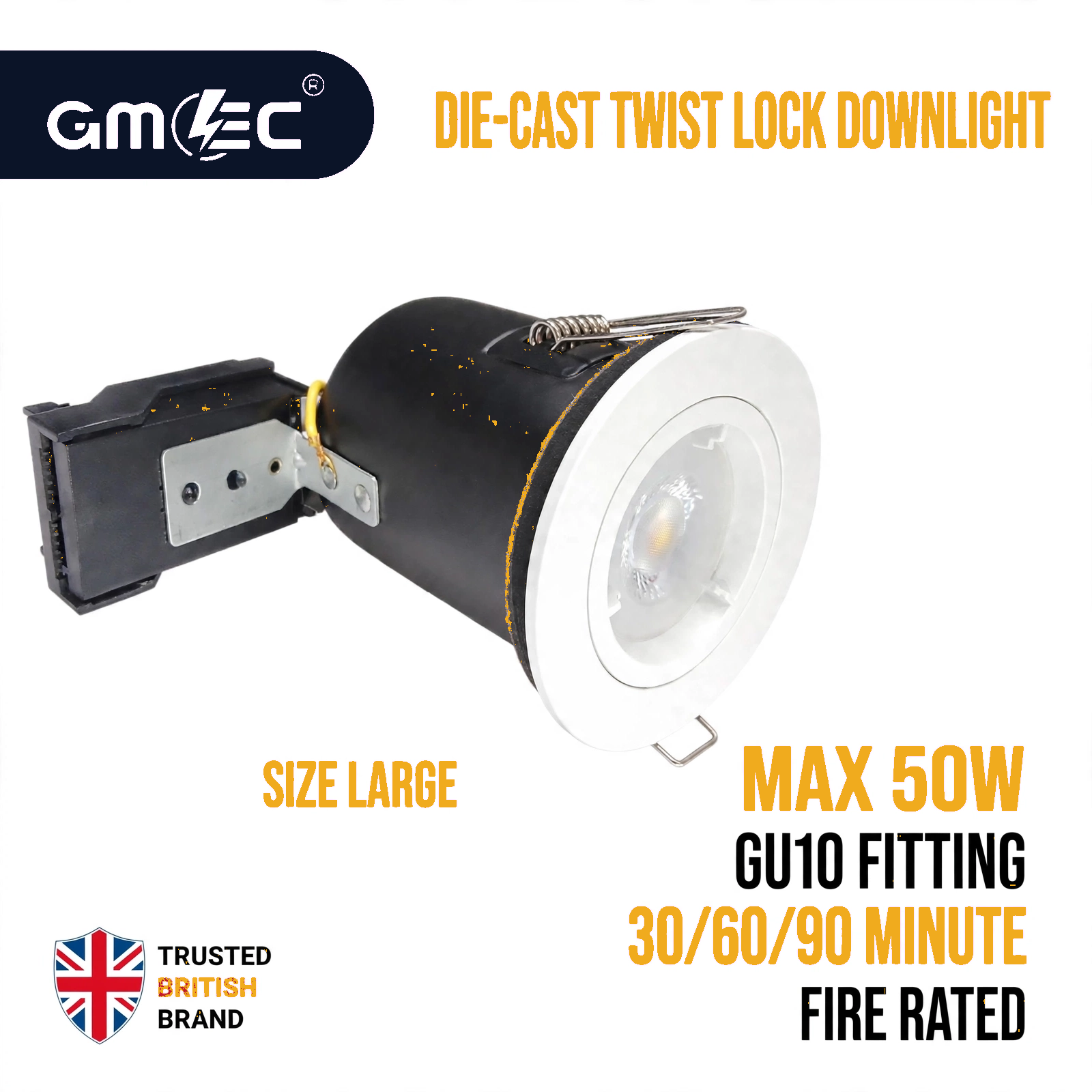
When you're looking to upgrade your home lighting, GU10 downlights are one of the best investments you can make. They're modern, efficient, and transform how your space looks and feels. But choosing the right ones isn't straightforward. You need to understand sizes, brightness levels, fitting types, and whether fire-rated options are necessary for your space.
At GMEC Corporation, we supply GU10 downlights to homeowners, contractors, and electrical professionals across the UK. We've helped thousands of people understand the difference between standard downlights and fire-rated downlights, and how to choose the right brightness for their specific rooms.
This guide walks you through everything you need to know about GU10 downlights in the UK. Whether you're installing them in your kitchen, living room, or bedroom, you'll have the knowledge to make the right choice.
What Are GU10 Downlights and How Do They Work
GU10 downlights are small spotlight bulbs that fit into recessed ceiling fixtures. The GU10 name refers to the fitting type. These are twist-in bulbs that lock at 90 degrees, making them quick and easy to install or replace.
Unlike traditional ceiling lights that provide general ambient lighting, GU10 LED bulbs deliver focused beam lighting. This means you can direct light exactly where you need it, whether that's highlighting your kitchen worktop or creating accent lighting in your living room.
The beauty of recessed downlights is that they sit flush with your ceiling, creating a clean, modern look. No unsightly fixtures hanging down, just neat recessed circles that look professional and contemporary.
GMEC Corporation stocks a complete range of GU10 downlights in various brightness levels and colour temperatures. Whether you need standard mains voltage lights or specialist fire-rated downlights for commercial or residential builds, we have the right option.
Understanding GU10 Fitting Types and Mains Voltage
What Makes a GU10 Fitting Different
The GU10 fitting has two small pins that push into your ceiling fitting. You push the bulb in straight and then turn it 90 degrees clockwise to lock it in place. This twist-lock mechanism is incredibly secure and means the bulb won't fall out accidentally.
When you're buying GU10 LED bulbs, you'll often see references to mains voltage lights. This is important. Mains voltage means the bulb runs on standard UK household electricity, typically 220V to 240V. This is different from low-voltage halogen bulbs that require a transformer.
Most modern GU10 downlights are mains voltage, which makes installation simpler because you don't need additional transformer equipment. You just install the bulb directly into your recessed fitting, and it works immediately.
GU10 Brightness Specifications
GU10 LED bulbs come in various wattage outputs, typically ranging from 3W to 20W depending on the brightness you need. The wattage doesn't directly translate to brightness anymore since we're talking about LEDs, not old incandescent bulbs.
For GU10 brightness guide purposes, look at lumens instead. A typical 5W GU10 bulb produces around 400 to 500 lumens. A 7W bulb produces around 600 to 700 lumens. A 10W bulb gives you 900 to 1000 lumens. This matters because different rooms need different brightness levels.
Your kitchen might need 900 to 1200 lumens total across multiple downlights for task lighting. Your bathroom might need 600 to 800 lumens across two or three fixtures. Your living room accent lighting might only need 400 lumens from a single focused beam.
Colour Temperature Considerations
GU10 LED bulbs come in different colour temperatures measured in Kelvin. Cool white options sit at 5500K to 6500K, perfect for task lighting in kitchens and offices. Warm white sits at 2700K to 3000K, ideal for living rooms and bedrooms. Some people ask about gu10 3200k, which sits between warm and neutral, offering a balanced option.
Fire-Rated Downlights: Do You Actually Need Them?
This is where confusion often starts. Fire-rated downlights cost more than standard downlights, so people wonder whether they're actually necessary.
Understanding Building Regulations UK
UK building regulations require fire-rated downlights in certain situations. If your ceiling contains insulation directly above the fitting, you need fire-rated downlights. This is because standard downlights can allow heat and flames to pass through the ceiling cavity in case of fire.
Fire-rated downlights have a metal collar that prevents flames from passing through the ceiling gap. They also typically have lower wattage rating because the metal collar restricts heat dissipation slightly.
When Fire-Rated Downlights Are Mandatory
If you have a loft conversion or your ceiling sits directly below insulation, building regulations require fire-rated downlights. This applies whether you're doing a new installation or replacing existing fittings.
If your home was built after 2000, it almost certainly has insulation in the ceiling. This means you almost certainly need fire-rated downlights. Some older Victorian or Edwardian properties have uninsulated cavities, but this is increasingly rare.
When you're building or renovating, it's cheaper to install fire-rated downlights at the same time rather than upgrading later. The cost difference is typically 20 to 30 percent per bulb, but you only pay it once.
GMEC's Fire-Rated Downlights
GMEC Corporation stocks fire-rated downlights designed specifically for UK building regulation compliance. These are tested and certified to ensure they meet safety standards. They deliver excellent brightness and longevity while keeping your home safe.
If you're unsure whether you need fire-rated options for your specific situation, GMEC's team can advise. Call +44 7951 282482 or email info@gmeccorporation.com with details of your ceiling type, and they'll confirm what you need.
Recessed Downlights: Installation Basics
Understanding Recessed Fitting Types
Recessed downlights require a fitting installed into your ceiling. There are different types depending on your ceiling construction. Plasterboard ceilings typically use adjustable fittings that allow for slight angle adjustment. Concrete or permanent ceilings use fixed fittings.
When you're planning your installation, think about spacing and positioning. Most designers recommend spacing downlights about 1.2 metres apart for even coverage. Too close together creates overly bright spots. Too far apart creates dark patches.
Installation Considerations
Installing recessed downlights is usually a job for a qualified electrician, particularly if you're tying into existing wiring or working above insulated ceilings. The electrician will ensure proper wiring, safe insulation clearance, and building regulation compliance.
If you're replacing existing downlights with new GU10 LED bulbs, that's simple. Just unscrew the old bulb and twist in the new one. No additional work required.
Professional vs DIY Installation
For new installations, hiring a professional is the sensible choice. The cost of a qualified electrician is small compared to the risk of incorrect installation. For replacements, you can do it yourself if you're comfortable working on ladders and the existing fitting is properly installed.
GU10 Brightness Guide: Choosing the Right Lumens for Your Room
Room-by-room brightness needs vary significantly. Understanding these helps you choose the right GU10 brightness guide for your space.
Kitchen Lighting
Kitchens typically need between 900 and 1200 lumens of total brightness across multiple downlights. This provides enough light for food preparation and general tasks. Most kitchens use between three and six downlights depending on size.
If you're using GU10 LED bulbs rated at 700 lumens each, you'd need two bulbs for adequate task lighting across a small kitchen worktop. Larger kitchens need more coverage.
Many people position downlights directly above the main work surfaces and add additional accent lighting around the perimeter for general ambience.
Bathroom Lighting
Bathrooms need 600 to 800 lumens total brightness. Two or three GU10 downlights positioned around the bathroom provide sufficient lighting. Many people position one or two above the mirror for task lighting and additional bulbs for general ambient light.
Bathrooms benefit from cool white downlights because they support alertness in the morning and help you see clearly for personal grooming tasks.
Living Room and Bedroom Lighting
Living rooms and bedrooms can use lower brightness levels, typically 400 to 600 lumens. This creates a more relaxed atmosphere whilst still providing enough light for comfort. Accent lighting from downlights creates nice visual interest in these spaces.
Warm white GU10 LED bulbs work particularly well in living rooms and bedrooms because they create a cosy, welcoming ambience.
GU10 Downlights UK: The Complete Installation Process
Step 1: Measure Your Space
Measure your ceiling and determine where you want downlights positioned. Most spaces benefit from lights positioned roughly 1.2 metres apart, though this varies based on ceiling height and room size.
Step 2: Choose Your Brightness
Decide how many lumens you need total and divide by the number of downlights you're installing. This tells you what brightness level each individual bulb needs.
Step 3: Select Standard or Fire-Rated
Determine whether you need standard or fire-rated downlights based on your ceiling construction and insulation positioning.
Step 4: Professional Installation
Have a qualified electrician install your recessed fittings. They'll ensure everything meets building regulations and is safely wired.
Step 5: Install Your Bulbs
Once the fittings are installed, simply twist your new GU10 LED bulbs into place. They're maintenance-free and long-lasting, typically operating for 25,000 to 50,000 hours depending on quality.
Comparing GU10 Downlights to Other Lighting Options
GU10 vs Surface-Mounted Ceiling Lights
GU10 recessed downlights look neater because they sit flush with your ceiling. Surface-mounted lights hang down or attach to the ceiling surface. Downlights create a more contemporary look whilst surface mounts work better in older properties where ceiling alteration isn't practical.
Brightness can be equivalent between the two if you choose the right specifications. The main difference is aesthetic and installation complexity.
GU10 vs Traditional Halogen Downlights
Halogen GU10 bulbs require less wattage to achieve brightness but consume significantly more electricity and generate heat. Modern GU10 LED bulbs consume 80 percent less energy and last 25 times longer than halogen equivalents.
The cost difference has narrowed dramatically. LED bulbs are now cheaper to run over their lifetime despite higher upfront cost.
GU10 vs LED Strip Lights
LED strip lights offer different advantages. They're flexible, can bend around corners, and work well for accent lighting under kitchen cabinets or around shelving. GU10 downlights work better for general ceiling illumination and task lighting from above.
Many modern kitchens combine both, using downlights for general brightness and strips for task-specific accent lighting.
Common Questions About GU10 Downlights
Can I Install GU10 Downlights Without Insulation Clearance
No. If your ceiling sits directly above insulation, you must use fire-rated downlights. Standard downlights create a fire risk because they allow heat and flames to pass into the ceiling cavity. Fire-rated options have metal collars that prevent this.
Do I Need a Transformer for Mains Voltage GU10 Lights
No. Mains voltage lights work directly on standard UK household electricity at 220V to 240V. You only need a transformer if you're installing low-voltage halogen downlights, but these are becoming less common because LED mains voltage options are superior.
How Long Do GU10 LED Bulbs Last
Modern GU10 LED bulbs last between 25,000 and 50,000 hours depending on quality and manufacturer. GMEC's bulbs are rated for extended lifespan, meaning you'll replace them less frequently than cheaper alternatives.
Can I Dim My GU10 LED Bulbs
Most modern GU10 LED bulbs are dimmable, but not all. Check the product specification before buying if dimming is important to you. Dimmable versions cost slightly more but offer flexibility if you want to adjust brightness levels.
What's the Difference Between gu10 3200k and Other Colour Temperatures
gu10 3200k sits between warm white (2700K) and neutral white (4000K). It offers a balanced option that works in various room types. Kitchens typically prefer 4000K or higher for task lighting. Living rooms prefer 2700K or 3200K for ambience. This choice depends on your personal preference.
Why Choose GMEC Corporation for Your GU10 Downlights
GMEC supplies recessed downlights to homeowners, contractors, and electrical professionals across the UK. Our range includes standard brightness options and fire-rated alternatives for building regulation compliance.
We stock GU10 LED bulbs in various wattages and colour temperatures. Whether you need cool white for task lighting, warm white for ambience, or neutral tones for balanced illumination, we have the right specifications.
Our team understands UK building regulations and can advise on fire-rated requirements for your specific situation. Call +44 7951 282482 or email info@gmeccorporation.com if you're unsure whether your installation needs fire-rated downlights.
We also stock complementary lighting products. Our cool white LED bulbs work well for kitchens and task areas. Our LED ceiling lights provide general ambience. These products complement your downlight installation perfectly.
Free delivery on orders over 100 pounds and 14-day returns mean zero risk trying different specifications. Our team is available 24/7 if you have questions about fittings, brightness levels, or whether you need fire-rated options.
Installing Your GU10 Downlights: Final Steps
Once you've decided on your downlights and had them professionally installed, you'll immediately notice the difference. Your space will look more contemporary, brightness will be precisely where you need it, and energy bills will drop because LEDs use so much less electricity than older bulbs.
Most people report that proper recessed downlighting transforms their space. Where ambient ceiling lights created a flat, one-dimensional look, downlights create visual interest, highlight architectural features, and make the space feel larger and more sophisticated.
Visit GMEC's GU10 Downlights collection to see the full range of specifications. Choose your brightness level, colour temperature, and whether you need fire-rated options. Place your order, arrange professional installation, and enjoy your transformed space.
If you need advice on specific requirements, call GMEC at +44 7951 282482. Their team understands UK lighting standards, building regulations, and the practical considerations of recessed downlight installation.
The investment in proper downlighting is small. The improvement to your home's look and function is enormous. Modern GU10 downlights represent excellent value and will operate reliably for decades.
Published by GMEC Corporation, London. Visit gmeccorporation.com for GU10 downlights UK and complete lighting solutions.
Ready to choose your lights?
Free UK delivery over £100, 14-day returns and 24/7 support. Not sure whether you need fire-rated? Ask our team.