
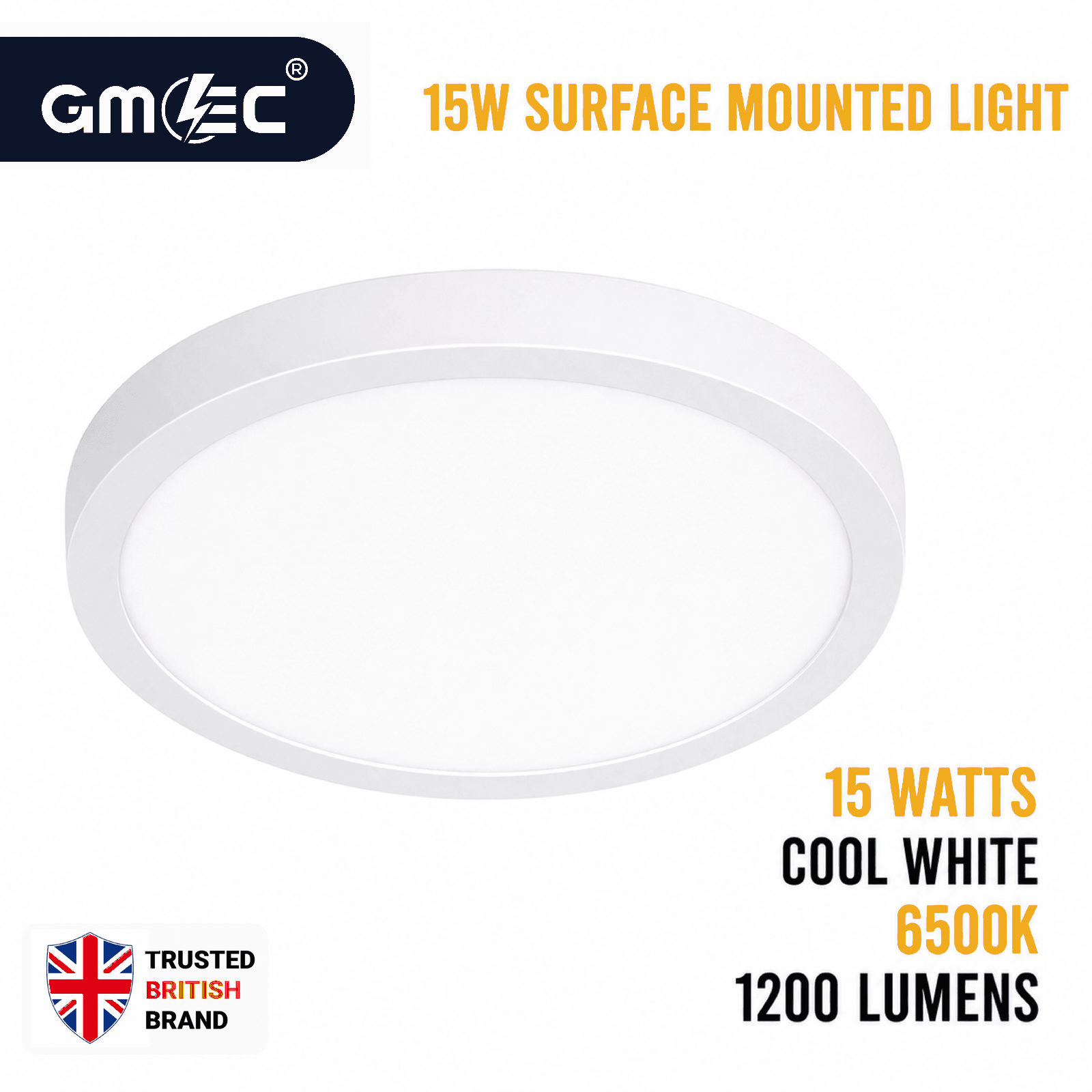
Your ceiling lights are the foundation of how your home looks and functions. The right ceiling light fixtures transform a dull space into somewhere bright, welcoming, and genuinely comfortable. Yet most people choose ceiling lights based on price rather than how well they actually work in their specific rooms.
This is a mistake. Poor ceiling lights waste money, create unflattering light, and make rooms feel uncomfortable. Proper LED ceiling lights UK solve all these problems simultaneously. They deliver brightness when you need it, consume a fraction of the electricity your old lights used, and last for years without replacement.
At GMEC Corporation, we supply ceiling light fixtures to homeowners upgrading their spaces. We understand which bright ceiling lights work where, how energy-saving ceiling lights actually save money, and why choosing the right product matters more than you'd think.
This guide walks you through everything about LED ceiling lights for every room in your home. From understanding brightness specifications, to choosing between ceiling light fixtures and LED panels, to calculating exactly how much energy you'll save.
Understanding Ceiling Lights UK and Brightness Specifications
Before choosing any ceiling lights, understand what makes them work well or poorly in your space.
How Brightness Is Measured
- Brightness is measured in lumens, not watts. This confusion trips up most people. An old incandescent bulb's wattage roughly correlated to brightness. LEDs don't work that way.
- A 10W LED produces around 800 to 1000 lumens. A 20W LED produces around 1600 to 2000 lumens. You need lumens, not watts, to understand actual brightness.
- Your room size determines how many lumens you need total. A small bathroom needs 400 to 600 lumens. A medium kitchen needs 1200 to 1600 lumens. A large living room needs 1500 to 2500 lumens depending on how many fixtures you have.
- GMEC stocks bright ceiling lights with clear lumen specifications. Always check the lumens when comparing LED ceiling lights UK rather than looking at wattage.
Colour Temperature Matters
- Ceiling light fixtures come in different colour temperatures measured in Kelvin. Warm white at 2700K to 3000K suits living rooms and bedrooms. Neutral white at 4000K works in most spaces. Cool white at 5000K to 6500K suits kitchens and workspaces.
- Choosing the wrong colour temperature makes your room look and feel wrong. Warm lighting in a kitchen makes food look off. Cool lighting in a bedroom feels unwelcoming. Match your colour temperature to the room's purpose.
Colour Rendering Index (CRI)
- CRI measures how accurately colours appear under your light. A CRI of 80 is acceptable. A CRI of 90 plus is excellent. Poor CRI makes everything look slightly off or faded.
- Quality LED panels and ceiling light fixtures have CRI of 90 or higher. This ensures colours in your home look natural and accurate.
Types of Ceiling Light Fixtures: Finding What Works for Your Space
Different fixture types suit different rooms and installation situations.
Surface-Mount Lights: The Simple Option
- Surface-mount lights attach directly to your ceiling. They don't require recessed installation work. This makes them perfect for renters or situations where cutting into your ceiling isn't practical.
- Modern surface-mount lights are thin and sleek. They don't hang down visibly like old fixtures. Quality designs look contemporary and professional.
- Surface-mount lights work well in kitchens, bathrooms, hallways, and utility areas. They're the easiest to install and retrofit into existing spaces.
- GMEC stocks surface-mount lights in various sizes and brightness levels. These bright ceiling lights deliver proper illumination without installation complexity.
LED Panels: Modern, Efficient Ceiling Lights
- LED panels are flat, recessed fixtures that provide even, flicker-free light. They're increasingly popular in modern homes because they look sleek and deliver excellent brightness.
- Panels sit flush with your ceiling once installed into a recessed cavity. They provide shadowless light suitable for offices, kitchens, and any space needing consistent illumination.
- Energy-saving ceiling lights in panel form use significantly less electricity than traditional fixtures. A 40W LED panel produces around 3200 lumens with virtually no heat generation.
Recessed Downlights: Focused Lighting
- Recessed downlights provide focused brightness from a specific point. Unlike panels which provide even illumination, downlights create spotlighting effects.
- These work well when you want to highlight specific areas like kitchen worktops or create accent lighting in living rooms. Multiple downlights can layer to provide complete room illumination.
For guidance on recessed downlights, visit our complete GU10 downlights guide. These work alongside your ceiling lights as part of a layered lighting scheme.
Pendant Lights and Decorative Fixtures
- Some ceiling light fixtures serve both functional and decorative purposes. Pendant lights hang from the ceiling and provide task lighting plus visual interest.
- These work well over kitchen islands, dining tables, or as focal points in entryways. They're functional ceiling lights that also enhance your interior design.
Choosing Bright Ceiling Lights for Specific Rooms
Room purpose determines which ceiling lights work best.
Kitchen Ceiling Light Fixtures
- Kitchens need bright ceiling lights for safety and functionality. Food preparation requires good visibility. Poor lighting makes cooking unsafe and unpleasant.
- A typical kitchen needs 1200 to 1600 lumens of total brightness. This might come from a single large LED panel, multiple surface-mount fixtures, or a combination of panel and downlights.
- Choose cool white around 4500K to 5000K for kitchen ceiling lights. This colour temperature keeps food colours looking natural whilst providing adequate brightness for detailed work.
- Surface-mount lights work well in kitchens because they're easy to clean. LED panels work if you have space to install them. A combination of both provides excellent flexibility.
- GMEC's range of bright ceiling lights includes kitchen-specific options. These are designed for the brightness and colour temperature kitchens actually need.
Bathroom Ceiling Light Fixtures
- Bathrooms need 600 to 800 lumens total brightness. A single surface-mount fixture or small LED panel usually suffices.
- Position your ceiling lights directly above the mirror if possible. This ensures good light for grooming tasks. Some people add additional downlights around the bathroom for even illumination.
- Bathrooms are humid environments. Choose fixtures rated for moisture resistance. Many ceiling light fixtures aren't suitable for bathrooms. GMEC stocks bathroom-specific options rated for humid conditions.
- Cool white works well in bathrooms because it supports alertness during morning routines. Some people prefer neutral white for a less clinical feel.
Living Room Ceiling Lights
- Living rooms need 1000 to 1500 lumens total, but this should be dimmable or adjustable for different moods. Bright for daytime activities, dimmer for evening relaxation.
- Surface-mount lights work beautifully in living rooms. Modern designs look contemporary and elegant. Pair with table lamps and wall lights to create layered lighting.
- Warm white around 2700K to 3000K suits living rooms perfectly. This colour temperature creates a welcoming, relaxing atmosphere.
- Choose dimmable ceiling lights if possible. This gives you flexibility to adjust brightness as your evening progresses.
Bedroom Ceiling Lights
- Bedrooms need modest brightness, typically 400 to 600 lumens. Excessive brightness makes bedrooms uncomfortable for relaxation.
- Warm white at 2700K is ideal for bedrooms. This colour temperature supports natural sleep rhythms and creates a restful atmosphere.
- Some people prefer slightly dimmed ceiling lights in bedrooms. Others add dimmer switches so they can adjust brightness easily.
- Surface-mount fixtures work well here. Choose designs that look soft and welcoming rather than harsh or clinical.
Home Office Ceiling Lights
- Home offices need good brightness for focus and productivity. Aim for 1200 to 1600 lumens depending on space size.
- Cool white at 5500K to 6500K keeps you alert and focused. This colour temperature mimics daylight and supports concentration.
- LED panels work excellently for home offices because they provide even, flicker-free illumination essential for screen-based work. Avoid fixtures that flicker because this causes eye strain and headaches.
- Pair with task lighting from desk lamps for additional focused brightness on your work surface.
Energy-Saving Ceiling Lights: How Much Do You Actually Save
Understanding the financial benefits of upgrading to LED ceiling lights motivates many people to make the switch.
Electricity Consumption Differences
- An old 60W incandescent bulb provides around 800 lumens whilst consuming 60W. A modern 8W LED provides the same 800 lumens whilst consuming only 8W. That's a 7.5x reduction in power consumption.
- If your home has ten ceiling lights, replacing incandescent with LED saves 520W continuously. Over a year, assuming average usage, this translates to real money saved on electricity bills.
Annual Savings Calculation
- Electricity costs vary by region. Let's assume 15 pence per kilowatt hour, which is typical in the UK.
- Replacing ten 60W incandescent fixtures with ten 8W LED fixtures saves 520W continuously when on. Over 12 hours daily usage, that's 6.24 kilowatt hours daily. Over a year, that's 2278 kilowatt hours annually.
- At 15 pence per kilowatt hour, you save around 342 pounds annually just on that one change.
- Most homes have far more than ten fixtures. Add in hallways, bathrooms, garages, and outdoor lights, and savings multiply significantly.
Additional Savings From Lifespan
Energy-saving ceiling lights don't just save on electricity. They save on replacement costs too. LED bulbs last 25,000 to 50,000 hours. Incandescent bulbs last 1000 hours. You replace incandescent bulbs dozens of times before one LED reaches end of life.
This lifespan difference compounds savings over years.
Return on Investment
LED ceiling lights cost more upfront than incandescent. However, the energy savings and extended lifespan mean you recoup the extra cost within months. After that, you're saving money continuously.
Most LED upgrades pay for themselves within 6 to 12 months through electricity savings alone.
LED Panels vs Traditional Ceiling Light Fixtures
Understanding the differences helps you choose what's right for your home.
LED Panels Advantages
- Modern, sleek appearance that suits contemporary homes. Even, shadowless illumination across the entire fixture. Flicker-free operation supports eye comfort. High colour rendering ensures accurate colours. Very energy efficient consuming minimal power. Can sit flush with ceiling for minimal visual impact.
- LED panels work beautifully in modern homes and commercial spaces.
LED Panels Disadvantages
Require recessed ceiling space to install properly. More expensive than some traditional fixtures. Need appropriate mounting space in your ceiling structure. Some require transformer installation depending on power requirements.
Traditional Ceiling Light Fixtures Advantages
Vast design variety to match any décor style. Work with existing ceiling structures without modification. Easy to install for most homeowners. Range from budget to luxury options. Compatible with existing wiring in most cases.
Traditional Fixtures Disadvantages
Some create visible shadows if not positioned carefully. May have visible brightness variation across the fixture. Style choices sometimes look dated rather than contemporary. Traditional designs are often less efficient than modern panels.
Surface-Mount Lights: Installation and Practical Guidance
Surface-mount lights are the most accessible ceiling lighting option for homeowners.
Choosing the Right Size
- Ceiling light fixture size should be proportional to your room. A tiny fixture in a large room looks insignificant. An oversized fixture in a small room overwhelms the space.
- General rule: the fixture width should be roughly one-tenth of the room width for balanced appearance.
- GMEC stocks surface-mount lights in various sizes. Measure your room and match the fixture proportionally.
Installation Overview
- Most homeowners can install surface-mount lights themselves. Turn off power at the breaker. Remove your old fixture. Connect the new wiring following the included instructions. Mount the new fixture.
- For complex wiring situations or if you're uncomfortable working with electricity, hire an electrician.
Style Considerations
- Surface-mount lights come in countless styles. Minimalist designs suit contemporary homes. Traditional designs suit period properties. Industrial designs suit modern lofts. Choose what complements your interior design.
- A well-chosen surface-mount light becomes a focal point enhancing your space. A poorly chosen one detracts from your décor.
Brightness and Lumens: Getting the Math Right
Correct brightness specifications prevent you from installing lights that leave you squinting or waste energy unnecessarily.
Room Size and Brightness
- Small rooms under 10 square metres: 400 to 600 lumens total.
- Medium rooms 10 to 20 square metres: 800 to 1200 lumens total.
- Large rooms 20 to 40 square metres: 1200 to 2000 lumens total.
- Very large rooms over 40 square metres: 2000+ lumens total.
These are general guidelines. Adjust based on room purpose. Kitchens and offices need the higher end. Bedrooms need the lower end.
Multiple Fixtures
- If installing multiple ceiling lights in one room, divide your total lumens requirement by the number of fixtures to determine each fixture's specification.
- Three fixtures in a 1500 lumen room would need three fixtures rated at 500 lumens each. This provides even illumination without dark patches or overly bright spots.
Considering Layered Lighting
- Ceiling lights are usually just one layer of your room's lighting. Add table lamps, wall lights, and accent lighting. This layered approach provides flexibility and visual interest.
- Your ceiling lights should provide adequate general brightness. Other layers add task lighting and ambience.
Why Choose GMEC for LED Ceiling Lights
GMEC Corporation supplies ceiling light fixtures to homeowners upgrading their lighting. We understand what actually works in different rooms and situations.
- Our range includes surface-mount lights in various styles and brightness levels. LED panels for contemporary spaces needing even illumination. Energy-saving ceiling lights designed to reduce your electricity consumption substantially.
- We stock bright ceiling lights rated for kitchens, bathrooms, living rooms, bedrooms, and home offices. Each specified for the colour temperature and brightness that room actually needs.
- Our team understands UK building standards and installation requirements. They can advise whether your space needs new wiring, whether existing installations are suitable, and which brightness levels work best for your specific room dimensions.
- We also stock complementary products. Our GU10 downlights work alongside ceiling lights for layered illumination. Our cool white LED bulbs suit task lighting in kitchens. Our colour changing lights add ambience to living spaces.
- Browse our complete range of ceiling light fixtures. View surface-mount options, LED panels, and decorative fixtures. Check brightness specifications and colour temperatures. Read reviews from other homeowners.
- Free delivery on orders over 100 pounds means you can order multiple fixtures without excessive postage costs. Fourteen day returns give you confidence that the lights will work correctly in your space.
- Our team is available 24/7 if you have questions about specifications, installation, or which ceiling lights suit your needs. Call +44 7951 282482 or email info@gmeccorporation.com for advice.
Making Your Home Brighter and More Energy-Efficient
Quality ceiling lights transform how your home looks and functions. Proper brightness supports productivity and comfort. Energy-saving ceiling lights reduce your environmental impact and lower your bills.
- The investment in good ceiling light fixtures pays back through years of reliable operation and tangible energy savings.
- Start by assessing your current situation. Which rooms have inadequate lighting? Which fixtures are old and inefficient? Which spaces would benefit most from upgraded brightness?
- Prioritise rooms where you spend most time. Kitchens and home offices justify higher investment because good lighting directly impacts productivity and safety. Bedrooms benefit from warm, dimmable options that support relaxation and sleep.
- Once you've prioritised, visit GMEC's ceiling lights collection. Explore different styles and specifications. Calculate the brightness your space needs. Choose ceiling light fixtures that match both your functional requirements and your interior design preferences.
- The transformation from old, dim, inefficient lighting to modern, bright, energy-saving ceiling lights is dramatic. Your home will look better immediately. Your electricity bills will drop noticeably. Your quality of life improves because you're comfortable and well-lit in spaces where you spend significant time.
Published by GMEC Corporation, London. Visit gmeccorporation.com for comprehensive ceiling lighting solutions and expert guidance on choosing the right fixtures for every room in your home.
Ready to choose your lights?
Free UK delivery over £100, 14-day returns and 24/7 support. Not sure whether you need fire-rated? Ask our team.